

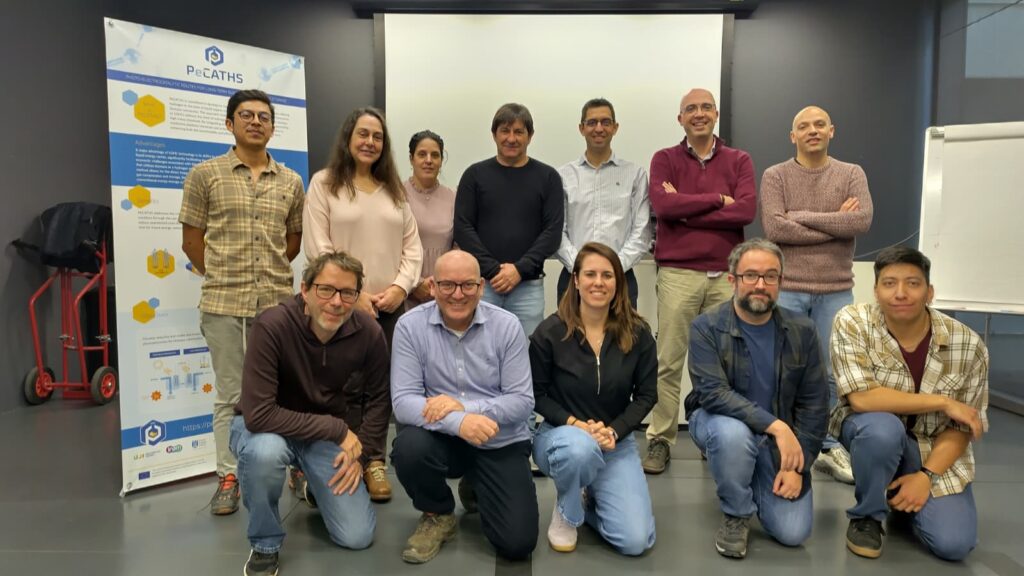
The PeCATHS consortium gathered in Barcelona on 2–3 December 2025 for its first General Assembly, hosted by the Catalan Institute of Nanoscience and Nanotechnology (ICN2). This meeting brought together the consortium members from seven leading European institutions to review progress to date and establish next steps for 2026.
PeCATHS focuses on developing photo-electrocatalytic routes for sustainable hydrogen storage using Liquid Organic Hydrogen Carriers (LOHCs). The project addresses some of the most urgent challenges in scaling hydrogen technologies by unifying breakthrough research in catalysis, materials design, modelling, sustainability analysis and communication. This first General Assembly demonstrated the consortium’s strong cohesion and the scientific maturity achieved during the project’s initial phase.
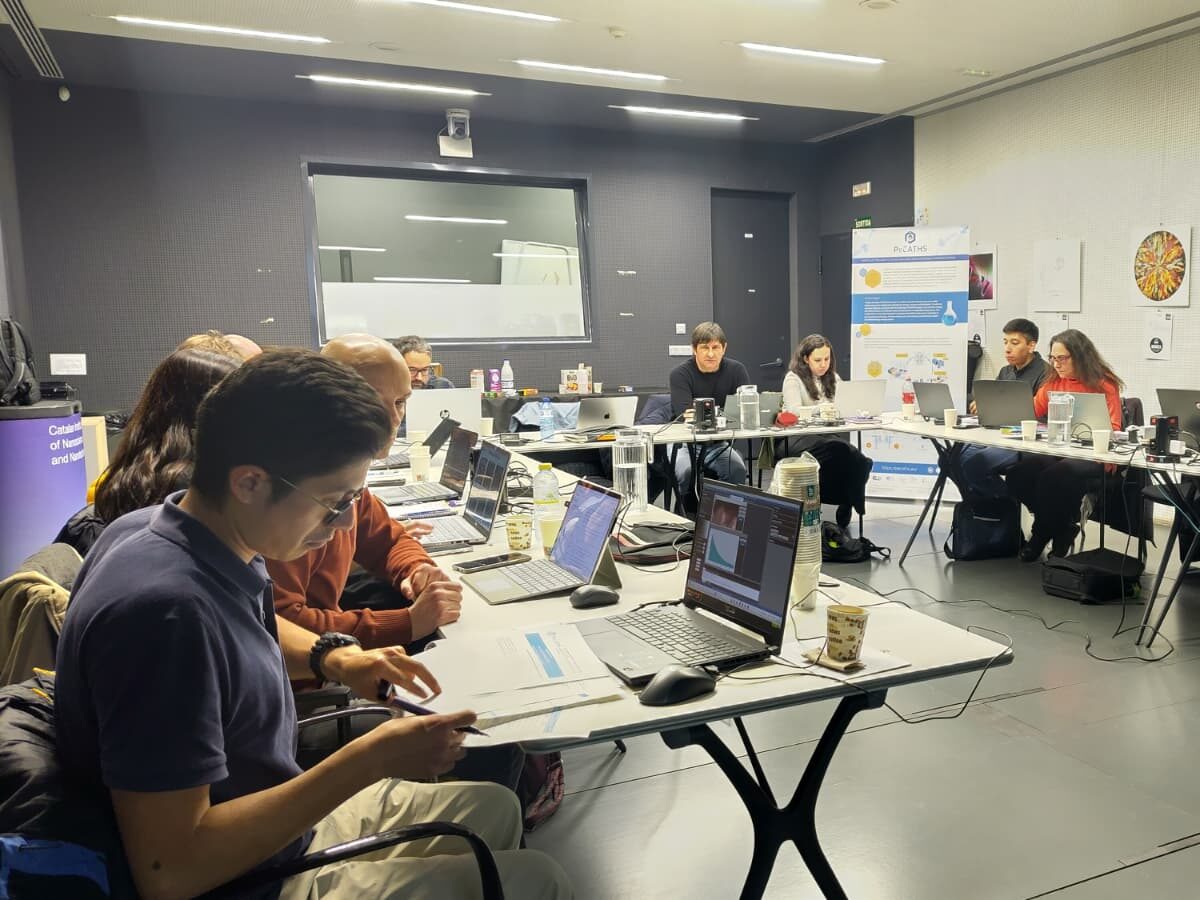
Hosted at the ICN2 facilities on Campus UAB Bellaterra, the two-day meeting comprised technical presentations, discussions, forward-planning sessions, and opportunities for closer collaboration among partners. Its agenda reflected the interdisciplinary nature of PeCATHS, with contributions spanning electrode engineering, photoactive materials, modelling, advanced characterisation, sustainability guidance, and science communication.
Day 1: Scientific Foundations and Forward Planning
The first day began with a working lunch that allowed partners to reconnect in person. Many members had been collaborating remotely for months, and some members joined PeCATHS for the first time. Hence, the Barcelona meeting provided an essential moment to align efforts and strengthen team dynamics across institutions in Spain, Switzerland, Ireland, and the wider European research landscape.
The technical programme started with the WP1 presentation led by Universitat Jaume I (UJI). WP1 is central to PeCATHS, as it develops and optimises electrodes for both hydrogen release and uptake processes. The update highlighted:
- Advances in electrode formulations and catalyst integration
- Insights into stability, degradation and potential optimisation routes
- The six-month roadmap for improving catalytic efficiency
- Dependencies with WP2 (materials) and WP3 (modelling)
- Initial risks identified, as well as mitigation strategies
The partners responsible for modelling (TCD), characterisation (ICN2) and sustainability (UJI) contributed questions and discussed the importance of harmonised testing environments.
The next session featured the WP2 update from University of Zurich (UZH). WP2 focuses on developing photoresponsive materials that can operate under realistic environmental conditions to drive hydrogenation and dehydrogenation reactions with high selectivity.
Progress discussed included:
- Development of robust photoelectrodes
- Approaches to integrate semiconductors with catalytic layers
- Advances in stability engineering
- Interactions with WP1 for electrode assembly
- Key experimental campaigns planned for early 2026
This session emphasised the synergy between material engineering, surface chemistry and operando characterisation.
The final session of Day 1 centred on WP3, led by Trinity College Dublin (TCD) with contributions from CIC energiGUNE. WP3 provides a deep screening for suitable carriers, atomic-level and mechanistic insight into catalytic reactions and materials behaviour, which are essential for improving catalyst design.
Key discussion points included:
- Identification of parameters that have the highest influence on performance
- Modelling of electrode resting states under realistic conditions
- Integration of microkinetic models with experimental data
- Next steps for coupling modelling outputs with WP1 and WP2
Partners noted that modelling is already shaping new experimental directions.
The first day concluded with an open dialogue session. This informal but structured exchange allowed teams to make requests, clarify interdependencies, and define where more collaboration would benefit the entire consortium. The day closed with a consortium dinner in Sant Cugat del Vallès, allowing participants to continue exchanging ideas in a more relaxed setting.
Day 2: Characterisation, Communication and Strategic Planning
The second day opened with renewed energy, focusing on the cross-cutting packages essential for coherence, visibility and internal organisation.
Led by ICN2, WP4 sits at the scientific core of PeCATHS. The ICN2 team presented an overview of their progress in analysing the structural, chemical and morphological properties of photoelectrodes and catalytic materials.
Highlights included:
- Atomic-level insights using TEM, STEM, EELS and XPS
- Studies on degradation mechanisms under operando conditions
- Identification of defect structures influencing catalytic performance
- Plans for correlating morphological changes with electrochemical behaviour
WP4 serves as the link between synthesis (WP2), electrode development (WP1), and modelling (WP3), making it a critical scientific pillar of the project.
The communication and exploitation package, co-led by COMET Global Innovation and European Innovation Marketplace (EIM), reviewed current dissemination activities and future plans.
Topics covered:
- Foundation settings and growth of PeCATHS’ digital presence
- Strategy for scientific communication and dissemination
- Planning of newsletters, website posts, updates and key messages
- Upcoming scientific events and opportunities for showcasing results
- Initial framing for exploitation routes and technology transfer
Clear communication is foundational to the project’s impact, and WP6 ensures that scientific results reach the research community, industry and the public. Also, understanding the exploitation activities is key to developing a fruitful roadmap.
The coordination team at UJI presented the overall progress of the project, administrative updates, risk monitoring and milestones for 2026.
Discussions focused on:
- Ensuring timelines remain aligned
- Preparing upcoming deliverables
- Strengthening internal communication across teams
- Maintaining efficient data exchange and reporting workflows
The coordination update provided clear guidance for the next operational period.
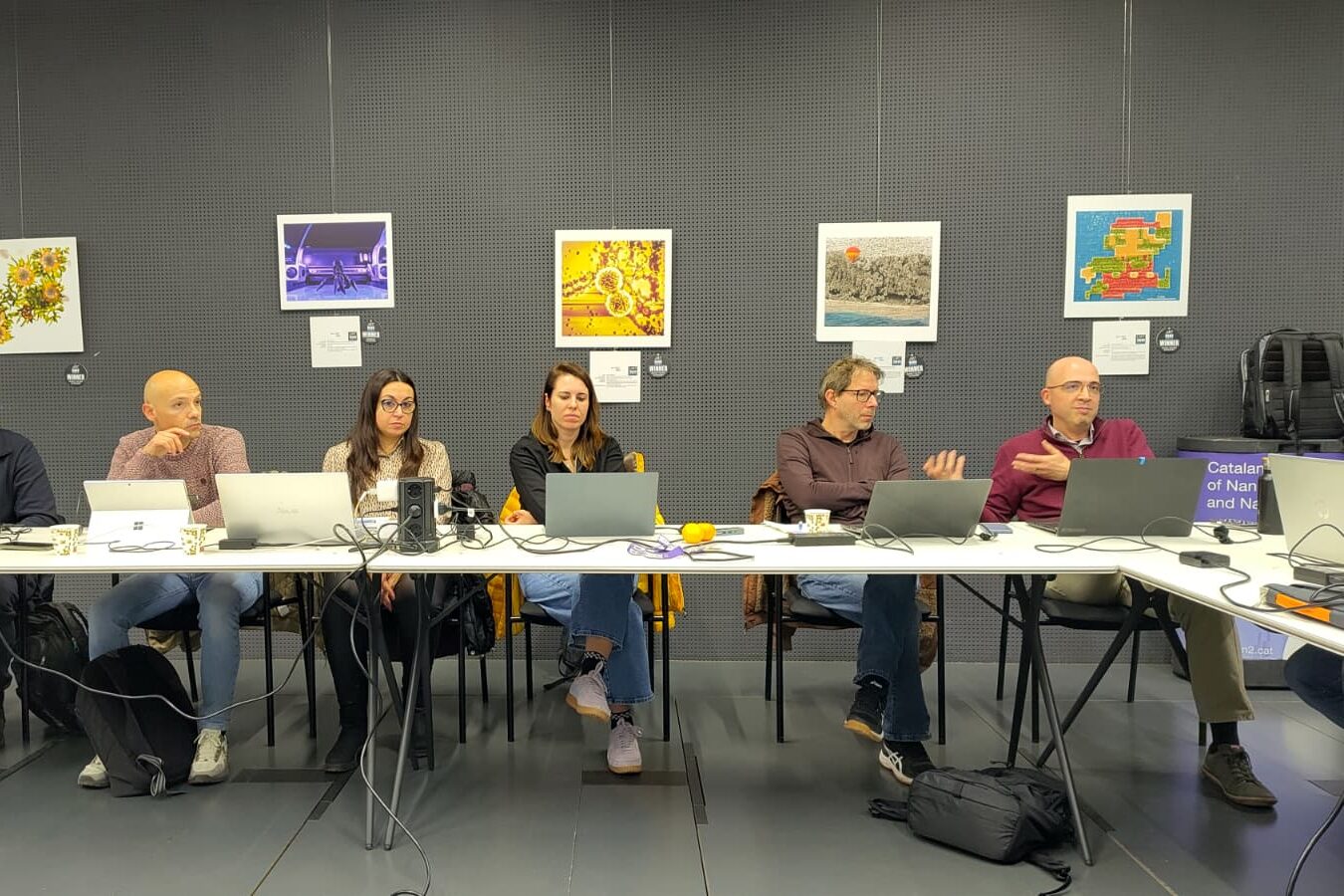
The meeting closed with a sense of unity and purpose. Partners expressed enthusiasm for the next phase of the project and appreciation for ICN2’s excellent hosting. The Barcelona General Assembly reinforced PeCATHS’ strong scientific foundation and its potential to make a significant contribution to Europe’s energy transition.